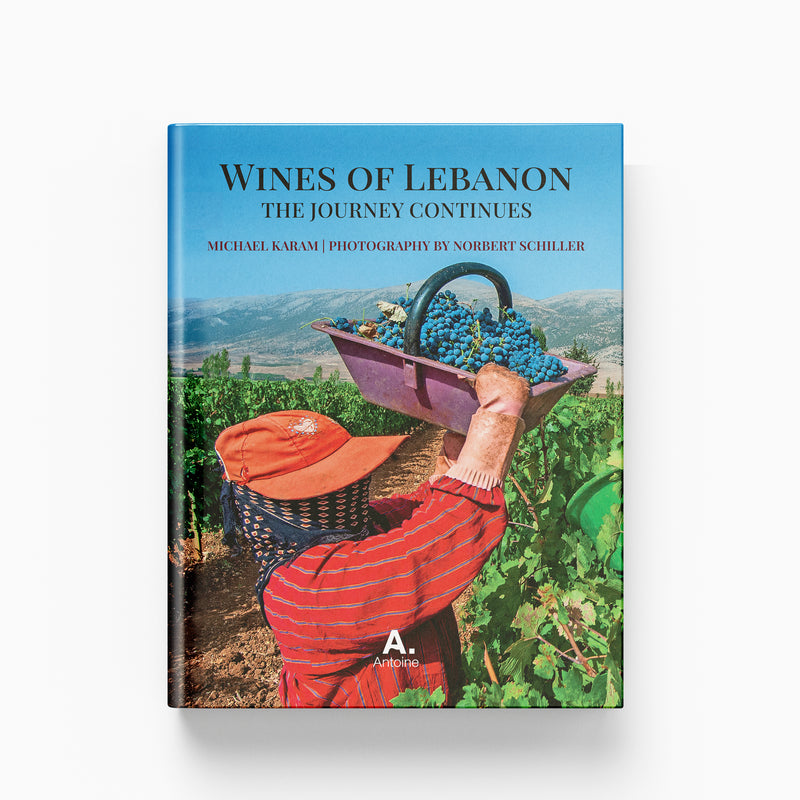
In this exclusive extract from Wines of Lebanon, winner of the André Simon Drink Award, Michael Karam traces how French rule, independence and a spirit of optimism helped shape the foundations of Lebanon’s modern wine industry.
Jesuits with French army surveyors in 1920. The French authorities were enthusiastic consumers of the wines at Ksara. (Photo courtesy of Tanail Monastery Collection)
The 1920 Treaty of Sèvres saw the end of the Ottoman Empire and the surrender of all non-Turkish territory to the victorious Allied nations. In the Eastern Mediterranean, on 29 September 1923, France was assigned the League of Nations Mandate of Syria, which included the territory of present-day Lebanon. Its remit extended from the northern city of Tripoli to Palestine in the south.
This new, post-Ottoman era also saw the arrival of tens of thousands of French civil servants and soldiers, all of whom needed a regular supply of wine, which they would buy from anyone who made it. It would be the beginning of a Lebanese love affair with France and all things French, ensuring that the wine culture, planted by the Jesuits and Francois Eugène Brun half a century earlier, would take root with more vigour than in any other country in the Levant.
‘Our father was originally a shoemaker who also made arak and small quantities of wine,’ recalled the late Bassam Nakad of Château Nakad in the Bekaa village of Jdita, a business founded in 1923 by his father, Joseph. ‘In Jdita there were around twenty-five small distilleries making arak. Then the French arrived, and we moved to wine.’
French soldiers based in the Bekaa Valley enjoy the local wine. When tens of thousands of French soldiers and civil servants arrived in Lebanon, the word went out that the new colonial masters would buy any locally-produced wine. (Photo courtesy of Norbert Schiller Collection)
Demand for wine ensured that the period was one of unprecedented growth for what would become a thriving cottage industry. Vineyard owners in the Bekaa, from Jdita to Ryak, and across Mount Lebanon, were encouraged to make as much wine as possible, and, crucially, move away from making the traditional, sweet, raisin-based wine and towards producing something the French would want to drink.
‘The whole area was at it, but only my father’s wine was continuously bought until the end of the French era,’ boasted Bassam’s brother Salim. ‘They told him that his wine was able to survive the rigours of the Syrian Desert. He would make 70,000 litres, but the French warned him that they would confiscate his wine if he tried to sell to anyone else.’
At Ksara, the Jesuits had been quick to heed the clarion call from the French, and their winery found itself selling wine that up until that point had been made for internal consumption. Now trading under the name Caves de Ksara, the winery had planted Carignan, Muscat and Ugni Blanc, to complement the Cinsault and Grenache introduced a little over 60 years earlier, and were ready to share their production. The ‘French factor’ would light the commercial touch paper and change the face of the winery forever.
Across the country, in the Keserwan village of Ghazir, another Lebanese turned to wine, albeit after a very different French experience. In 1928 Gaston Hochar (pictured right), scion of a wealthy Maronite family, travelled to Paris to study medicine. Instead of studying, he hung out with the city’s bohemian crowd and got an entirely different education. In 1929, on his return to Lebanon, he told his startled family that he had no interest in becoming a doctor and wished to become a winemaker. ‘He might as well have said he was opening a bordello,’ recalls his son Ronald.
But one year later, with money lent to him by his mother, the twenty-year-old Gaston established a 30-hectare vineyard near the Mzar castle in Ghazir. His first vintage produced 8,000 cases. The French army bought the lot. ‘The winery was called Chateau Musar and for the next thirteen years Hochar and his wines rode a wave of French patronage.’
Independence
By 1940, the pro-Nazi Vichy administration was running Lebanon; the British, fearing that Lebanon and Syria would eventually fall under German control, sent in the troops. Operation Exporter saw British, Australian, Commonwealth, Free French and even Czechoslovakian soldiers advance north on Lebanon from Palestine, defeating the French and their German, Italian, Lebanese and Syrian allies in a campaign that lasted from 8 June to 14 July.
In 1943, a new Lebanese government unilaterally abolished the Mandate. France reacted by arresting its members and throwing them in jail; but, in the face of international pressure, on 22 November 1943 they were released, and Lebanon’s independence was finally recognised by France.
Hurrah for Lebanon. The country could now chart its own destiny, imbued with a sense of Francophone culture that sat comfortably with its cosmopolitan Arab outlook.
But with France out of the picture, who was going to drink all the wine?
‘You must remember that our early wine was not sold. It was made for the consumption of the monks,’ explained veteran Jesuit Father Paul Browers in 2006. ‘It was the French who inspired the business aspect, and the synergy between the French army and the French Jesuits had become crucial. We thought it was over when the French left.’
Gaston Hochar also found himself facing the prospect of no customers.
‘I remember my mother telling me that my father was very concerned during this period,’ his son Ronald recalls. ‘He didn’t know what to do. He was married with four children. He asked her, “Are the Lebanese going to drink this much wine?”’
He may not have felt it at the time, but things would turn out OK. Lebanon had embraced the French and French culture with a passion that can still be felt today. Wine may have still lagged behind arak, but its embodiment of sophistication, of all that was France, would be enough to sustain demand.
Bedouins harvesting in front of the Château Ksara winery. Photo credit: Norbert Schiller
Lebanon was also entering a period of optimism and openness. Recently independent, it had not yoked its fortunes to those of the Arab world. Much of the Ottoman diaspora, mainly Armenians, as well as many Palestinians and Egyptians escaping the upheaval and political tension in their own countries, had sought out Lebanon’s cosmopolitan sanctuary. With the exception of the six weeks in the summer of 1941, the country had been virtually untouched by the Second World War and it was ready to take advantage of the peace. ‘All the wineries benefited from this, and by and large the wines were for that time decent wines,’ in Ronald Hochar’s view.
Beirut grew into a glamorous and convivial hub, an oasis in a turbulent region for émigrés, bankers, businessmen, diplomats, journalists and spies – and the next thirty years would be the so-called golden age of pre-civil war Lebanon. ‘My father recognised that wine had a certain place in the new Lebanon,’ Ronald told me. ‘It was bustling. There was trade and there was travel. Foreigners came and went. People drank more and, crucially for us, they drank wine.’`
This extract is taken from Wines of Lebanon by Michael Karam and Norbert Schiller, published by Librairie Antoine.
Michael Karam has written about wine for Decanter, Harpers, The Drinks Business, The Spectator, Club Oenologique, and jancisrobinson.com. He is the author of several acclaimed books, including Wines of Lebanon (Gourmand Award winner, 2005), Tears of Bacchus, and Michael Karam’s Lebanese Wines. A contributor to major wine references such as The Oxford Companion to Wine and The World Atlas of Wine, he also co-wrote and starred in the 2020 documentary Wine and War. His media appearances include BBC, CNN, CNBC, and Winemasters TV.
Norbert Schiller is a veteran photojournalist who has spent more than 40 years covering the Middle East and Africa for organizations including the Associated Press, AFP, The New York Times, and Der Spiegel. He has reported on major conflicts across the region and collaborated with Michael Karam on several books, including Wines of Lebanon and Arak and Mezze. Schiller has also authored and illustrated books on the region’s culture and history and curates photorientalist.org, an archive dedicated to historic images of the Middle East and North Africa.
Related Products
-
Wines of Lebanon
Michael Karam
Regular price £70.00Regular priceUnit price / perSale price £70.00
Related Posts
-
France, Independence and Optimism
In this exclusive extract from Wines of Lebanon, winner of the André Simon Drink Award, Michael Karam traces how French rule, independence and a spirit of optimism helped shape the...
France, Independence and Optimism
In this exclusive extract from Wines of Lebanon, winner of the André Simon Drink Award, Michael Karam traces how French rule, independence and a spirit of optimism helped shape the...
-
20 Wines that Changed the World
The Judgement of Paris, back in 1976, would not have succeeded without its illustrious cast of characters. There were the instigators (Steven Spurrier and Patricia Gallagher), the facilitator (Joanne Dickenson, who flew...
20 Wines that Changed the World
The Judgement of Paris, back in 1976, would not have succeeded without its illustrious cast of characters. There were the instigators (Steven Spurrier and Patricia Gallagher), the facilitator (Joanne Dickenson, who flew...
-
Dreaming of La Dolce Vita? Give these books a try.
If you’re looking to deepen your understanding of Italian wine and culture, whether for study or pleasure, this curated collection from Académie du Vin Library is an indispensable guide.
Dreaming of La Dolce Vita? Give these books a try.
If you’re looking to deepen your understanding of Italian wine and culture, whether for study or pleasure, this curated collection from Académie du Vin Library is an indispensable guide.
Receive Our Monthly Newsletter
Sign up to our newsletter and get exclusive wine updates from our global network of correspondents and more…