Rioja, established on 6 June 1925, is the oldest DOC (now a DOCa) in Spain. Its centenary has just been celebrated in style.
Celebrating 100 years of Rioja, Spain's oldest wine body. The President, Raquel Pérez Cuevas, with the Michelin-starred chefs who catered the gala dinner
The Consejo Regulador has just hosted about 70 wine writers and communicators from around the world who converged on Logroño to learn about the past and future of the region, visit some traditional and some groundbreaking wineries and taste spectacular wines. Of the nearly 600 wineries in Rioja, over 200 are open to the public and we visited or tasted the wines of about 150 of these.
The region has ancient wine roots, pre-dating the Romans, upset by the Moors and undistinguished until the latter part of the 19th century, when two local grandees, independently, moved to Bordeaux to study with the French masters. The Marquéses de Riscal and Murrieta brought these elevated winemaking skills back to Rioja, with cellar masters to help, and the region’s international reputation began to grow even before phylloxera devastated Bordeaux. Its vineyards decimated, Bordeaux turned to Rioja for the sort of light-bodied red wines the French loved. They invested heavily in the region, and a handful of wineries sprang up around the railway station in Haro. Today, the Barrio de La Estación is home to several of Rioja’s most esteemed and historic producers - CVNE, La Rioja Alta, Gómez Crusado, Roda, Muga and Bodegas Bilbainas.
Rioja sits in the beautiful Ebro valley, which is bisected by the river Ebro with seven tributaries adding more geographical complexity. There are microclimates galore, many different soils, altitudes, orientations and some of the smallest vineyard plots I have ever seen, coupled with the largest amount of old vine plantings anywhere in the world, including bush-grown Garnacha vines over 80 years old.
A very wide variety of grapes is allowed under DOC regulations. Riojanos have far more flexibility than, say, the Bordelaise or the Tuscans. Until the most recent change in their laws in 2017, the main restrictions were around ageing - how long wines must be aged in barrel and bottle to be labelled as crianza, reserva and gran reserva. This most recent evolution allows producers to specify if their wine is from a sub-region (Alta, Alavesa, Oriental), a village or even a named vineyard. There still seems to be some debate amongst producers if this latest move does enough, but there are many boundary-pushers, even within those who use either the ageing protocols and/or the newer terroir-based ones.
Wine tasting at Rioja Centennial Celebration
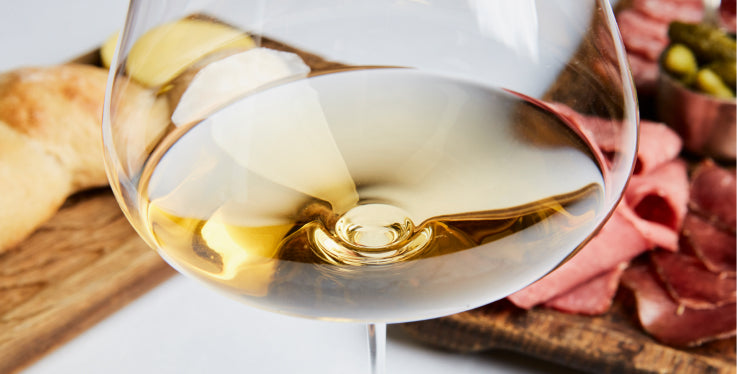
Pedro Ballasteros MW led two masterclasses. The first celebrated the diversity of 100km of the region. One of the unifying characteristics is the ability to age wonderfully, helped by fine tannins and the acidity of Tempranillo and its blending partners - usually Garnacha, Graciano and Mazuelo. The reds can be fruit-forward and vanilla-scented, caused by the American oak they have used for so long (a product of economics initially, but something that gave Rioja its signature nose), and they can also be austere and elegant, high-altitude examples of Tempranillo with restrained use of older French oak barrels. The spectrum is wide and full. Their whites, usually made primarily from Viura, cover a wide stylistic range too, depending on the use or not of oak in the ageing. They hold their own against plenty of Chardonnays from other top regions.
Many producers don’t make their top-tier wine every year - sometimes it’s not more than once or twice a decade.. Gran reservas are downgraded to reserva if the makers don’t think they quite live up to expectation, and some will hold on to wines for many years when it cannot be profitable to do this - Bodega Vinícola Real have a white wine, 200 Monges, that has been aged for 16 years. It will be released this year.
And just a quick note on the food - at the gala dinner the Consejo spoiled us with dishes from each of the Michelin-starred restaurants in the region and there are quite a handful. The food was superb and is another good reason to visit.
The second masterclass told the story of the last hundred years through the wineries that contributed the most to the history (there weren’t any 100-year-old wines, but several going back 50 years. One was the 1956 Marques de Riscal, which was elegant and reminiscent of wild strawberries, and the 1986 Castillo de Ygay from Murrieta had a bouquet I could have lost myself in for years and was both rich and structured, full of honey and mushrooms. At dinner, the 1964 Monte Real from Bodegas Riojanas and the 1978 Gran Zaco from Bodegas Bilbainas were served. Rioja can stand up to anything from France and Italy when it comes to ageing potential, and usually for much better value than the competition.
Some of the wines tasted at the gala dinner
Related Posts
-
The best places to drink in Sardinia
Isolated from mainland Italy by the Tyrrhenian sea, impenetrable landscapes and closed-off communities, Sardinia is an island that for millennia has resisted outside influences. As far as wine is concerned,...
The best places to drink in Sardinia
Isolated from mainland Italy by the Tyrrhenian sea, impenetrable landscapes and closed-off communities, Sardinia is an island that for millennia has resisted outside influences. As far as wine is concerned,...
-
Rioja’s Centennial Celebrations
Rioja, established on 6 June 1925, is the oldest DOC (now a DOCa) in Spain. Its centenary has just been celebrated in style. The Consejo Regulador has just hosted about...
Rioja’s Centennial Celebrations
Rioja, established on 6 June 1925, is the oldest DOC (now a DOCa) in Spain. Its centenary has just been celebrated in style. The Consejo Regulador has just hosted about...
-
Namratha Stanley on Wine, Womanhood and Solicantus
Namratha's recent memoir, Vineyard Melody, How One Woman Rebuilt Her Life, One Grape at a Time chronicles her journey from violent marriage to a thriving career in Bordeaux. “Education has...
Namratha Stanley on Wine, Womanhood and Solicantus
Namratha's recent memoir, Vineyard Melody, How One Woman Rebuilt Her Life, One Grape at a Time chronicles her journey from violent marriage to a thriving career in Bordeaux. “Education has...
Receive Our Monthly Newsletter
Sign up to our newsletter and get exclusive wine updates from our global network of correspondents and more…